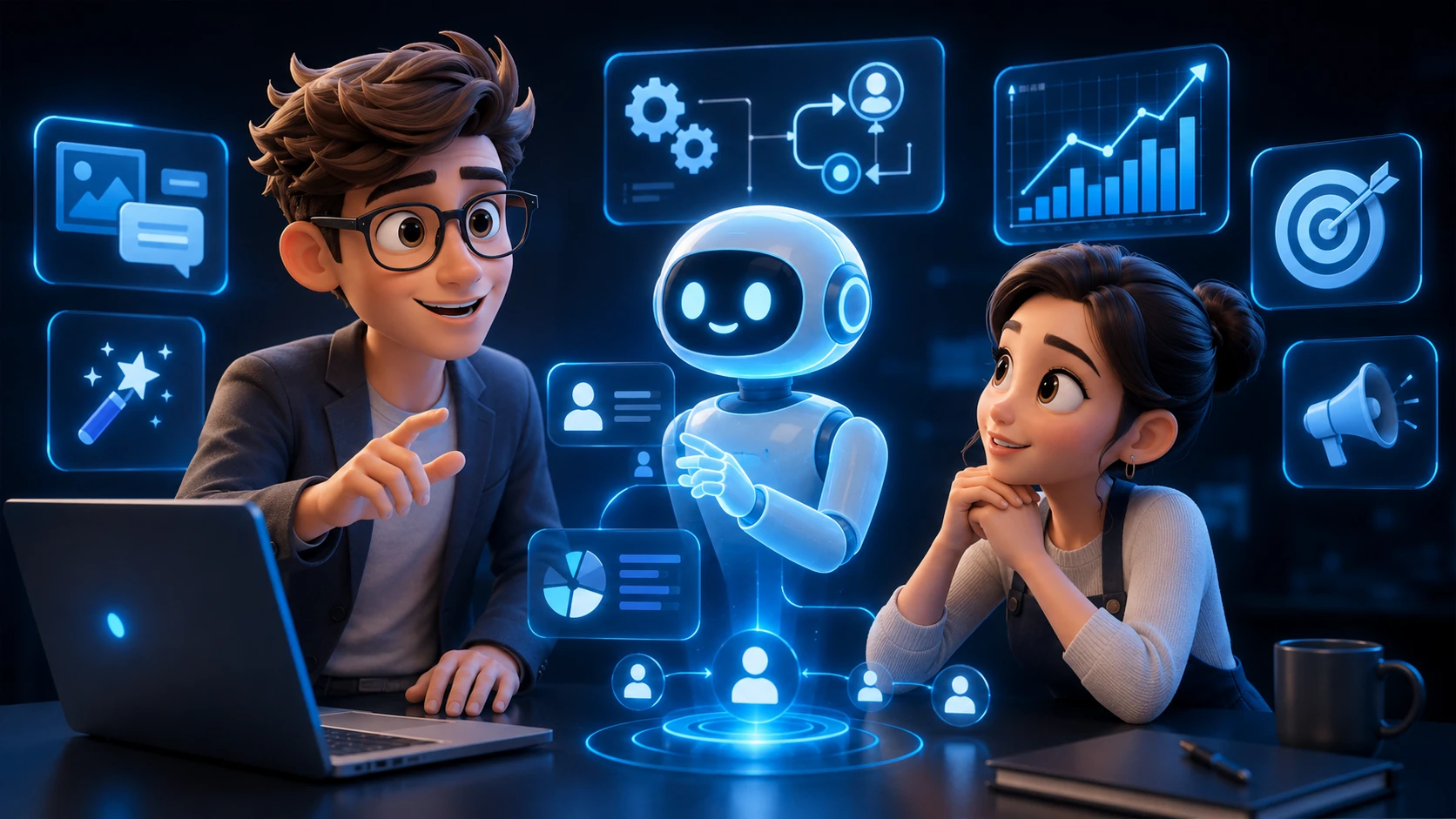
Artificial intelligence is no longer a future trend. It has become a core part of modern marketing strategies. Businesses are using AI to analyze customer behavior, automate repetitive tasks, create personalized experiences, and improve campaign performance. As digital marketing continues to evolve, companies that embrace AI gain a competitive advantage through faster decision-making and better customer engagement.
This guide explains how AI tools for digital marketing are reshaping the industry, where they create the most value, and how businesses can use them effectively in 2026.
Why AI Is Transforming Digital Marketing
AI processes large volumes of data in seconds, helping marketers make informed decisions based on customer behavior rather than assumptions.
Benefits of AI in Digital Marketing
Businesses using AI can:
- Improve campaign efficiency
- Deliver personalized customer experiences
- Reduce manual work
- Analyze marketing performance faster
- Increase lead generation
- Optimize advertising spend
AI supports marketers by improving productivity while allowing teams to focus on strategy and creativity.
AI Tools for Content Marketing
Creating high-quality content consistently remains a challenge for many businesses. AI simplifies the content creation process without replacing human expertise.
Content Research
AI tools help marketers identify:
- Trending topics
- Search intent
- Keyword opportunities
- Content gaps
This allows businesses to create content that aligns with audience demand.
Content Creation
AI assists with:
- Blog outlines
- Social media captions
- Email campaigns
- Video scripts
- Product descriptions
Human review remains essential to ensure accuracy, originality, and brand voice.
Content Optimization
AI tools evaluate content for:
- Readability
- SEO improvements
- Keyword placement
- Content structure
Optimized content performs better in search engines and improves user experience.
AI in Search Engine Optimization
SEO has become more data-driven with AI-powered platforms.
AI Improves Keyword Research
Modern AI tools analyze:
- Search trends
- User intent
- Keyword difficulty
- Competitive opportunities
This helps marketers target keywords with higher ranking potential.
AI Supports Technical SEO
AI can identify:
- Broken links
- Duplicate content
- Crawl errors
- Website performance issues
Regular technical audits improve website health and search visibility.
AI and Answer Engine Optimization
AI-driven search platforms require content structured for direct answers.
Businesses should focus on:
- Conversational content
- Topic clusters
- Schema markup
- Clear heading hierarchy
These practices improve visibility in AI-generated search results.
AI in Paid Advertising
Advertising platforms increasingly rely on artificial intelligence to improve campaign performance.
Smart Campaign Optimization
AI helps marketers:
- Optimize bids automatically
- Improve audience targeting
- Allocate budgets efficiently
- Predict campaign performance
This reduces wasted ad spend while increasing return on investment.
Creative Performance Analysis
AI identifies which:
- Headlines
- Images
- Videos
- Calls to action
Generate the highest engagement, allowing businesses to improve future campaigns.
AI in Social Media Marketing
Managing multiple social platforms becomes easier with AI.
AI Supports Social Media Through
- Content scheduling
- Caption suggestions
- Trend analysis
- Audience insights
- Performance reporting
These features help businesses maintain consistency while improving engagement.
AI in Customer Experience
Modern customers expect fast and personalized communication.
AI Improves Customer Engagement
Businesses use AI for:
- Chatbots
- Product recommendations
- Customer support
- Personalized messaging
- Automated follow-ups
These interactions improve customer satisfaction while reducing response times.
Challenges of Using AI in Digital Marketing
Although AI offers significant advantages, businesses should understand its limitations.
Common Challenges
- Overdependence on automation
- Generic content output
- Data privacy concerns
- Inaccurate AI-generated information
- Loss of brand personality
AI should enhance marketing efforts, not replace strategic thinking and human creativity.
Best Practices for Using AI in Marketing
Businesses should follow a balanced approach.
Recommended Practices
- Combine AI with human expertise
- Review AI-generated content before publishing
- Monitor campaign performance regularly
- Protect customer data
- Stay updated with AI advancements
Successful marketing combines technology with creativity and strategic planning.
How Scoopit Uses AI to Drive Better Marketing Results
Scoopit integrates AI into every stage of digital marketing while maintaining a human-first strategy.
AI-Powered SEO
Scoopit uses AI to identify keyword opportunities, improve content optimization, and strengthen search visibility.
Smarter Content Marketing
AI supports content research and planning, while experienced content specialists create high-quality, brand-focused content.
Performance Marketing
AI helps optimize paid campaigns by improving audience targeting, bid strategies, and conversion tracking.
Data-Driven Decision Making
Scoopit combines AI insights with marketing expertise to make informed decisions that improve business performance and maximize return on investment.
Conclusion
AI tools for digital marketing are changing how businesses attract customers, optimize campaigns, and measure success. From SEO and content marketing to paid advertising and customer engagement, AI improves efficiency and enables smarter marketing decisions. Businesses that combine AI with strategic planning will remain competitive as digital marketing continues to evolve. Scoopit helps businesses implement AI-powered marketing solutions that drive measurable growth while maintaining creativity, quality, and customer trust.
FAQs
What are AI tools for digital marketing?
AI tools for digital marketing help businesses automate tasks, analyze customer data, optimize campaigns, create content, and improve marketing performance.
Can AI replace digital marketers?
No. AI improves efficiency by handling repetitive tasks, but strategy, creativity, and relationship building still require human expertise.
Which marketing areas benefit most from AI?
SEO, content marketing, paid advertising, social media management, customer support, and analytics benefit significantly from AI technology.
Is AI useful for small businesses?
Yes. AI helps small businesses automate marketing activities, improve productivity, and compete more effectively with larger brands.
How does Scoopit use AI in digital marketing?
Scoopit combines AI-powered insights with experienced marketing strategies to improve SEO, content marketing, paid advertising, social media campaigns, and overall business growth.