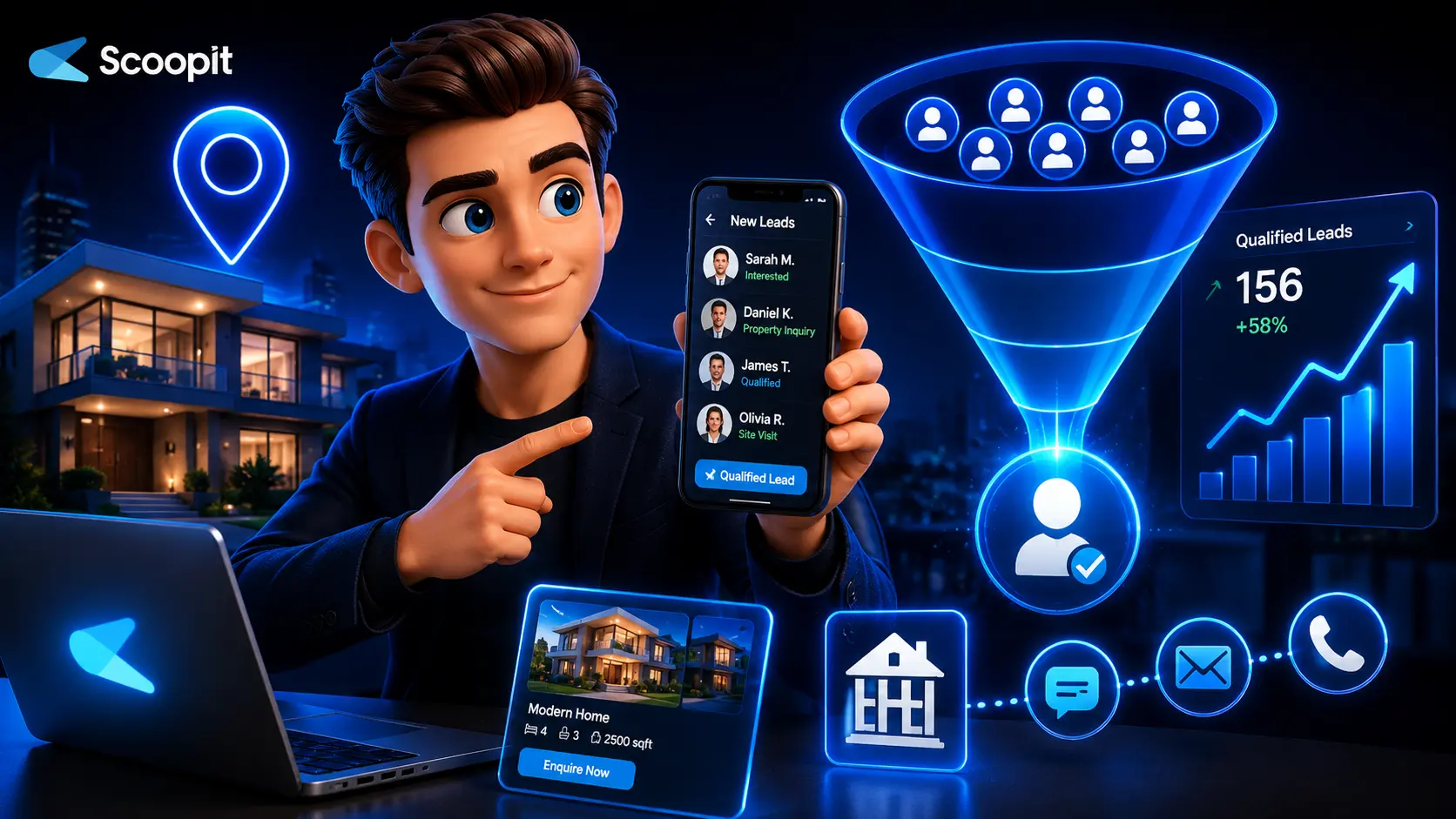
The way people search for property has changed completely. Before visiting a single site or speaking to an agent, most buyers spend weeks researching online, comparing projects, reading reviews, watching video walkthroughs, and forming opinions about developers.
If your real estate brand isn’t showing up in those early moments of research, you’re not even in the consideration set.
Here’s how digital marketing for real estate actually works in 2026, and what it takes to generate leads that are worth following up.
Why Traditional Property Marketing Is No Longer Enough?
Hoardings, newspaper inserts, and property expos still have a place, but they can’t do the job alone anymore. Your buyer has already searched “2BHK flats in [city]” before they ever notice your billboard.
The real estate buyer journey is now heavily digital, and the decision to enquire is often made after three to five online touchpoints, a search result, a social post, a YouTube walkthrough, or a Google Maps listing.
Digital marketing gives you presence at every one of those touchpoints.
Build the Right Digital Foundation First
Before running any paid campaigns, your digital foundation needs to be solid.
Your website should load fast, work perfectly on mobile, and have clear calls to action on every project page, phone number, WhatsApp button, and inquiry form, all visible above the fold.
Your Google Business Profile should be complete and actively managed, especially if you have a physical office or sales centre. Buyers regularly check this before visiting.
Local SEO is often the most underused asset in real estate. Ranking for “[project name] review” or “flats in [neighbourhood]” brings in high-intent organic traffic that costs nothing per click once it’s established.
Paid Ads That Attract Serious Buyers
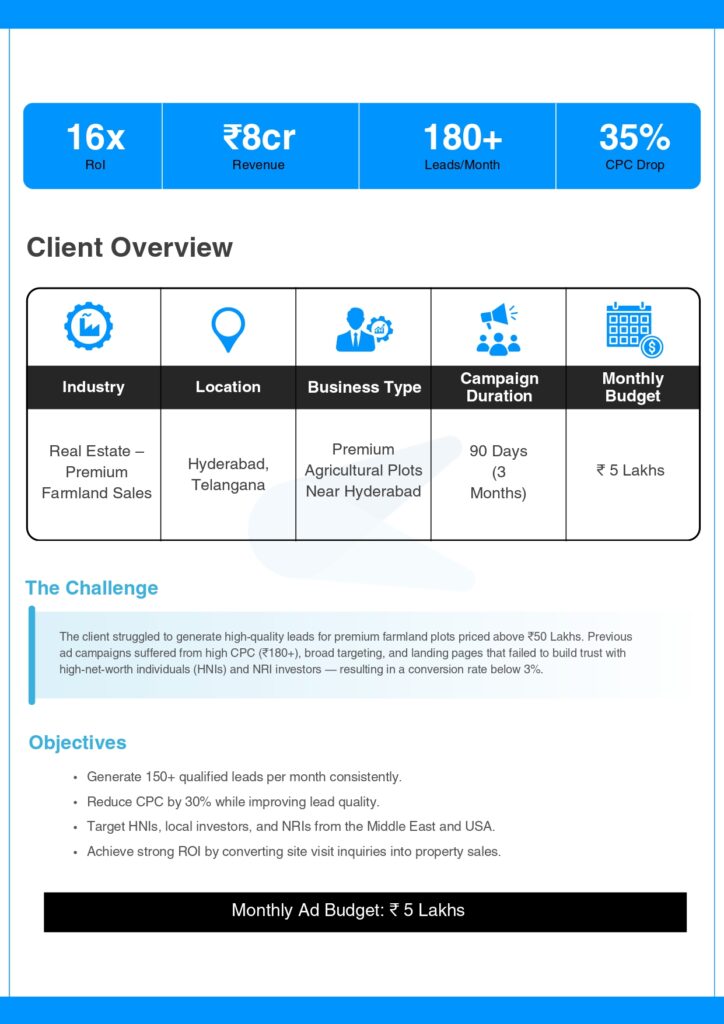
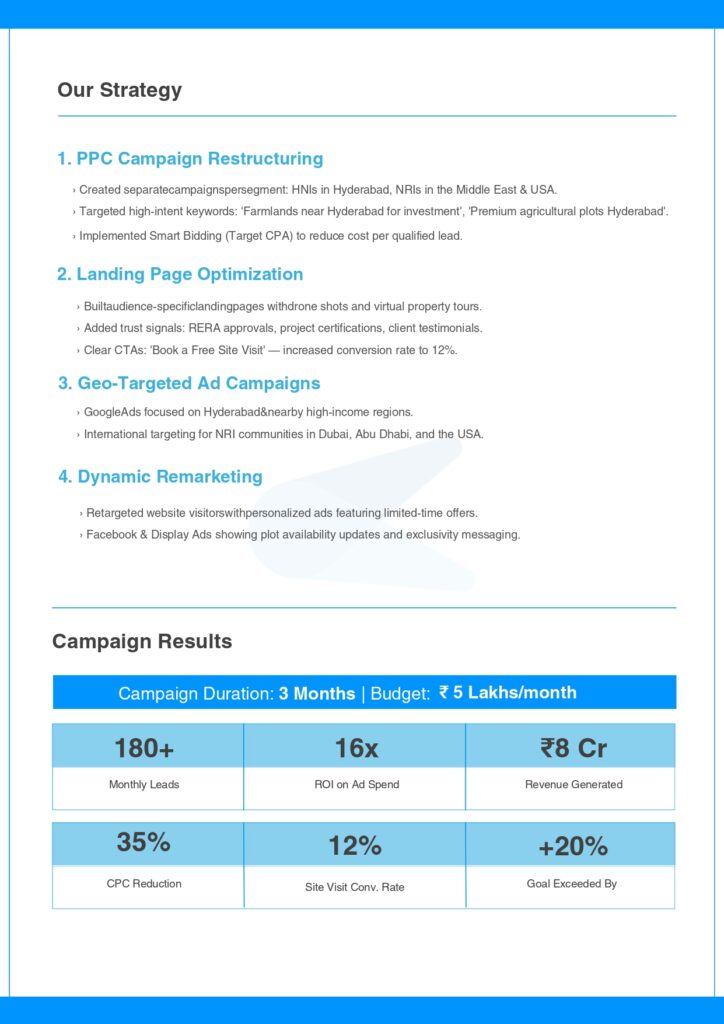
Google Search Ads work well for real estate because the intent is explicit. Someone searching “buy flat in Hyderabad under 60 lakhs” has told you exactly what they want. A well-structured search campaign can put you at the top of the results immediately.
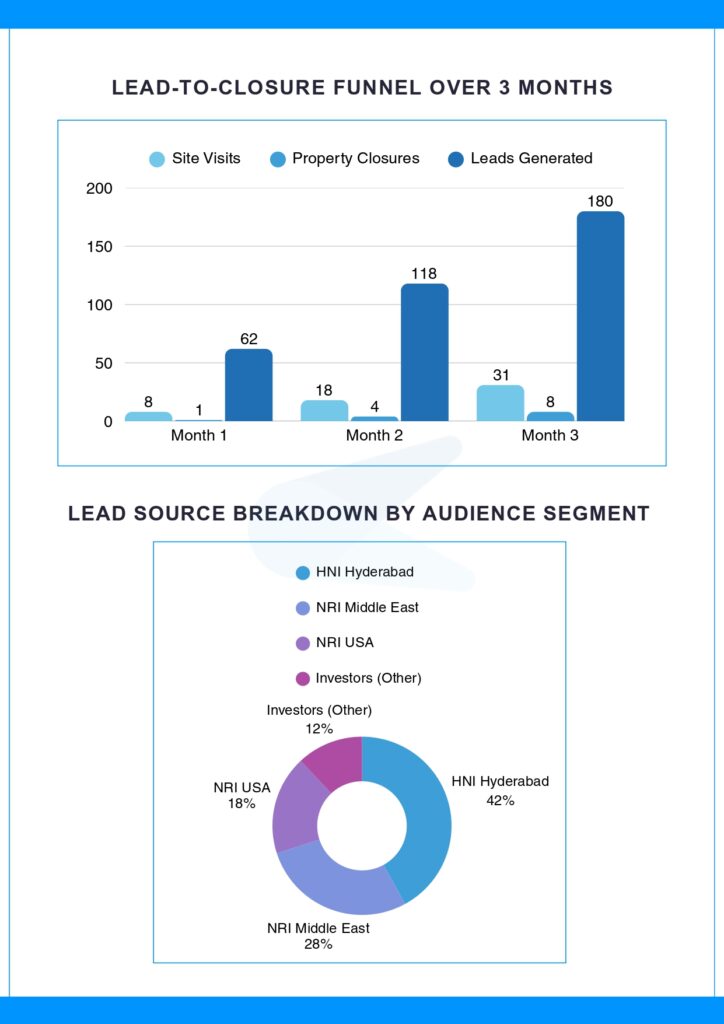
Meta Ads are better for awareness and warming up audiences who aren’t actively searching yet. Use carousel ads to showcase project highlights, short video ads for emotional storytelling, and lead forms to capture interest without friction.
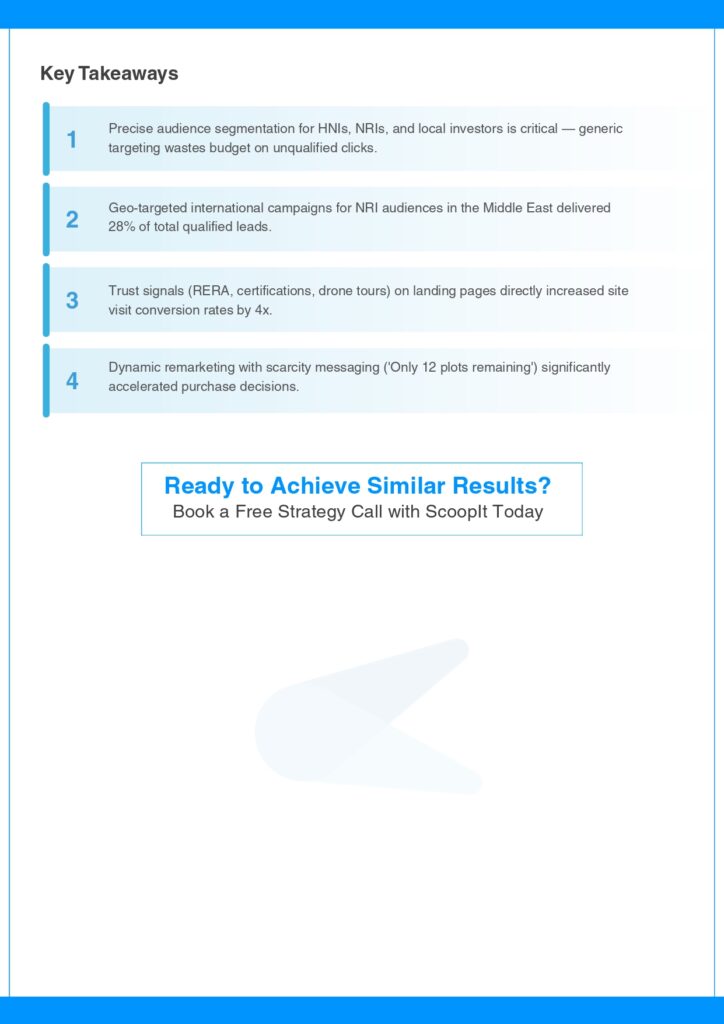
Retargeting is where most real estate brands leave money on the table. Someone who visited your project page and left without enquiring is a warm prospect. A retargeting campaign keeps your project in front of them across Google and Meta until they’re ready to act.
Social Media Strategy for Real Estate
Instagram and YouTube have become property discovery platforms, particularly for residential and luxury segments.
What works:
- Short Reels showing project progress, views, amenities, and neighbourhood lifestyle
- Behind-the-scenes content humanising your brand and team
- Comparison posts (“Here’s what ₹60L gets you in [Area A] vs [Area B]”)
- Client testimonials, ideally in short video format
The goal on social media isn’t just reach. It’s building enough trust that when someone is ready to enquire, they already feel like they know you.
SEO That Brings in Organic Enquiries
Real estate SEO works best at the hyper-local level. Target neighbourhood-specific keywords, project-name keywords, and buying-intent phrases like “ready to move flats in [area].”
Create individual landing pages for each project with proper on-page SEO, title tags, meta descriptions, schema markup, and locally relevant content. These pages can rank and generate enquiries for months without additional ad spend.
Nurturing Leads Without Losing Them
Most real estate buyers don’t convert on first contact. The average decision timeline is 3–6 months.
A structured WhatsApp or email follow-up sequence keeps your project top of mind during that window. Drip content, price updates, construction progress, limited-availability alerts, and maintain engagement without being pushy.
Conclusion
Real estate is a high-consideration purchase, and digital marketing done well reflects that reality. It’s about showing up early, building trust through multiple touchpoints, and making it easy for serious buyers to take the next step.
Agencies like ScoopIt have worked with real estate and property brands on exactly this kind of integrated digital strategy, combining SEO, paid media, and social to bring in leads that actually convert.
FAQs
Q1. What is the most effective digital marketing channel for real estate?
Google Search Ads for high-intent buyers and Instagram/Meta Ads for awareness and lead generation tend to deliver the strongest results together.
Q2. How do real estate agents get leads online without spending a lot?
Local SEO, Google Business Profile optimisation, and consistent social media content are the most cost-effective organic channels for real estate lead generation.
Q3. How much should a real estate brand spend on digital marketing?
A mid-sized project typically needs ₹50,000–₹1,50,000/month in ad spend, depending on location, competition, and sales targets.
Q4. Does social media actually generate real estate leads?
Yes, particularly Instagram and YouTube. While direct leads from social are fewer than from Google Ads, social content builds brand trust that significantly improves conversion rates from all channels.
Q5. How long does real estate SEO take to show results?
Typically, 3–6 months for competitive keywords. Hyper-local and long-tail terms can rank faster, sometimes within 6–8 weeks, with proper optimisation.